
Rally Sweden: Racing Towards Net-Zero in Sub-Zero Conditions
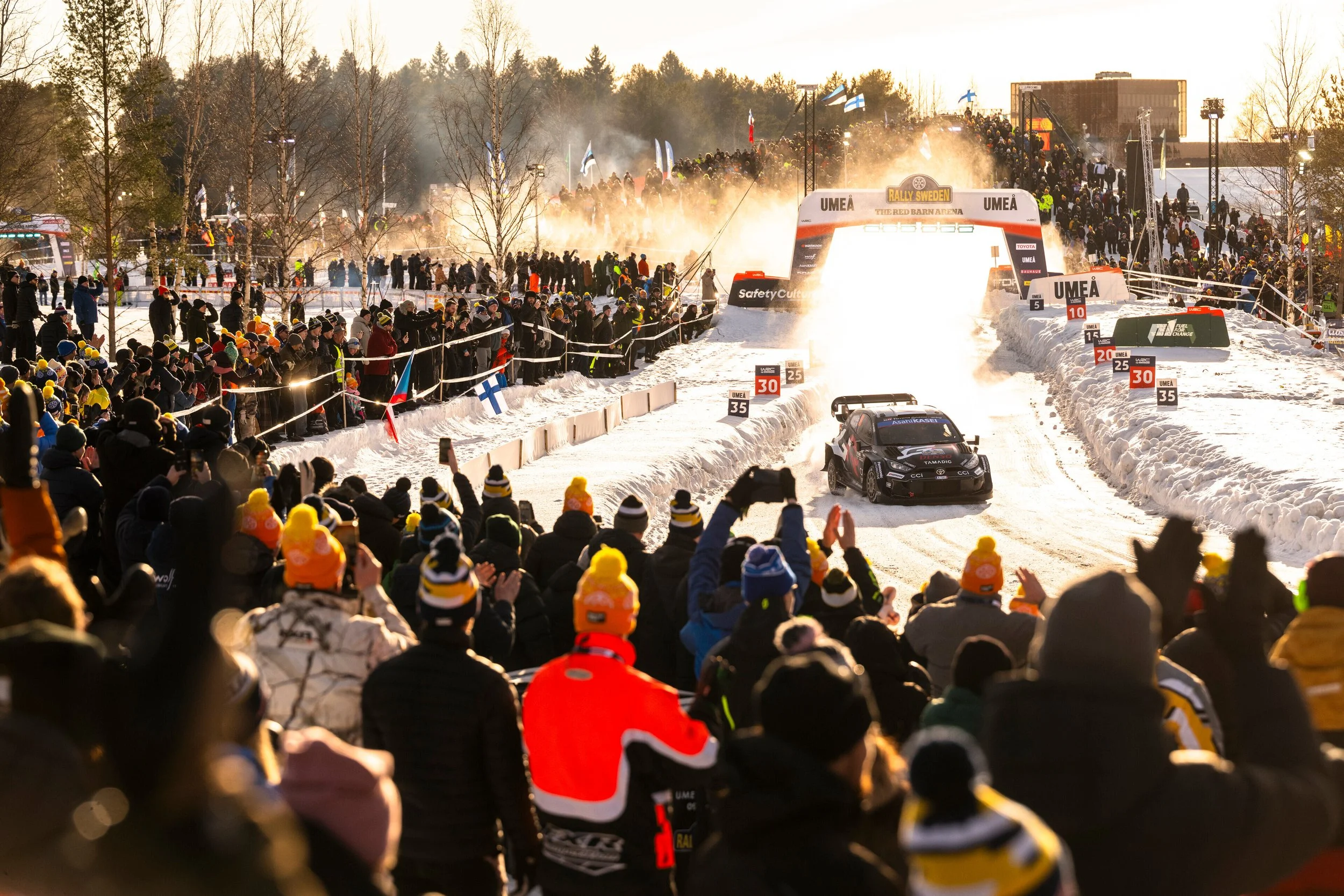
Image Courtesy: Jaanus Ree / Red Bull Content Pool
Rally Sweden has been directly impacted more than most sporting events by the disruption and unpredictability brought by climate change. Relocating to the northern city of Umeå in 2022 in search of the reliable snow and thick ice that define this unique sub-zero event, Rally Sweden has used its move north as a catalyst to strengthen its sustainability ambitions.
Since relocating, the event has implemented a comprehensive, structured sustainability strategy designed not only to protect its new surroundings, but also to safeguard the long-term future of winter rallying in a changing climate.
Enovation Consulting spoke with Jens Strömberg, Head Environmental Officer at Rally Sweden, who shared insight into the challenges, opportunities, and systems underpinning the event’s sustainability approach ahead of the 2026 FIA World Rally Championship’s second stage, starting on 12 February.
Rally Sweden’s Environmental Management System
Rally Sweden has a long history of strong environmental innovation. In recent years, however, evolving regulatory requirements from the FIA and the World Rally Championship have accelerated efforts to codify these practices. As Jens explains, the focus has been on “creating a structure for the environmental management system.”
This structured environmental management system (EMS) enables Rally Sweden to track environmental impacts over time, implement consistent operational processes, and align objectives with SMART targets.
Through this coordinated approach, Rally Sweden has established a set of environmental objectives that guide planning, delivery, and continuous improvement:
Zero waste left in the forest – No waste shall remain in the environment following the competition;
Zero incidents – No spills of hazardous substances, no personal injuries, and no lasting damage to terrain or ecosystems;
Carbon-neutral footprint – The rally has set an objective to reduce greenhouse gas emissions linked to the event by more than 50% by 2030 (compared to a 2023 baseline), with net-zero emissions targeted by 2040.
Image Courtesy: Jaanus Ree / Red Bull Content Pool
Addressing Rally Sweden’s Largest Emissions Source
Transport and mobility represent the largest share of Rally Sweden’s carbon emissions, driven primarily by spectator travel and team logistics.
Influencing and monitoring how spectators travel to remote, heavily forested special stages is inherently complex. However, Jens explains that while the race organisers “can’t decide how spectators travel to and from the competition”, they instead focus on enabling lower-emissions mobility options. Initiatives include free public transport for ticket holders, dedicated shuttle buses to special stages, and the promotion of shared transport among spectators.
Harnessing Northern Sweden’s Green Grid
Wherever possible, Rally Sweden prioritises connection to the local electricity grid, which in northern Sweden is largely powered by renewable sources, including hydropower and biomass.
Where generators are required, the event deploys HVO100 fuel, significantly reducing lifecycle emissions compared to conventional diesel. The event has also piloted battery energy storage solutions to help manage peak demand. Together, these measures have enabled Rally Sweden to reduce reliance on fossil fuels in line with its net-zero by 2040 target, while maintaining the reliability required for a complex winter motorsport event.

Image Courtesy: Jaanus Ree / Red Bull Content Pool
Managing Waste with the Environmentally Conscious Rally Community
Waste management at Rally Sweden is guided by one overarching objective: no waste must remain in the forest once the competition concludes. Rather than relying solely on post-event clean-up, the approach prioritises prevention and responsible spectator behaviour.
All spectators receive a recyclable bio-bag to collect their waste, supported by clearly marked waste zones and improved recycling infrastructure for both spectators and teams. As Jens notes, “the bio-bag hasn’t really been a solution to a problem — it’s more an encouragement to already well-functioning behaviour.”
Rally Sweden’s waste strategy therefore reinforces the environmentally conscious behaviour displayed by attendees, while continually improving sorting, signage, and contractor coordination to ensure the environment is left as it was pre-event.
Understanding Rally’s Impact on Biodiversity
To further enhance Rally Sweden’s environmental performance, Jens explained that the event is hoping to better understand its impact on the local flora and fauna ahead of future rallies. As a temporary event staged in snowy and icy conditions, Rally Sweden operates within a unique environmental context, meaning biodiversity initiatives differ from those possible at permanent circuits, raceways, or arenas.
However, by assessing sites along the special stages where ground disturbance has occurred – for example, due to a race car going off-road – the team hopes both to identify possible negative impacts as well as to uncover potential biodiversity benefits of rallying in the region.
Ultimately, the aim is “to investigate how and what role a rally event can play” in promoting the health of these delicate ecosystems. Unearthing the relationship between its activities and local ecosystems will enable Rally Sweden to host events that minimise ecological disruption and support future conservation efforts.